

Social media evangelism means sharing your faith with real people through posts, comments, and direct messages, treating platforms as mission fields instead of billboards. The single best first step is prayerful listening. Pick three people you follow, pray for them by name, and watch for an opening to talk about what Christ means to you. That small habit leads to real conversations and, eventually, invitations to meet or worship together.
TL;DR:
- Social media evangelism relies on personal, one-on-one interactions like listening, sharing testimonies, inviting conversations, and discipling, not broadcasting or livestreams.
- Engagement is more effective when it focuses on meaningful responses, follow-ups, and building trust over time, rather than chasing likes or views.
- Using platforms intentionally with specific tools such as Stories, DMs, and live videos boosts the chance for real relationships and deeper discipleship.
- Regular habits like posting brief testimonies, prayer threads, and behind-the-scenes content support sustained conversations and spiritual growth online.
- Success is measured by real responses, follow-up meetings, event signups, and ongoing engagement, not by social metrics like reach or impressions.
Table of Contents
- What Counts as Social Media Evangelism
- Why Share Your Faith Online
- Choosing the Right Platform for Your Audience
- Frameworks That Keep Online Witness Relational
- Content Ideas and Habits That Sustain Conversations
- Tracking What Matters and Avoiding Common Pitfalls
- A Publisher’s Take on Visible Faith Online
- Wearing Your Testimony Out Loud
- FAQ
- Sources
What Counts as Social Media Evangelism
Social media evangelism is personal, relational witness. One believer talks to one person, or a small group, about Jesus Christ. It is not institutional broadcasting. A church’s livestream or a denomination’s ad campaign is digital ministry, not evangelism in this sense, because there is no relationship behind it.

The two work together. About 17% of U.S. adults say they share religious content on social media, and 2% do this daily, according to Pew Research Center. Sharing rates run close to one-third among evangelical and historically Black Protestant groups, the same report found. Online sharing does not replace a church service. It often starts the conversation that leads someone back to one.
Core activities that count as social media evangelism:
- Listening to what people post before responding with faith content.
- Sharing a short, honest testimony about your own walk with Christ.
- Inviting someone to a conversation, a group, or a service.
- Discipling a new believer through ongoing messages and check-ins.
Why Share Your Faith Online
Social platforms put you in front of people you would never meet otherwise. Content posted once keeps working for months, reaching new eyes long after you hit publish. A single testimony video can live on Instagram, YouTube, and TikTok at the same time, multiplying its reach without multiplying your effort.
The theological case is just as strong. Jesus met people where they gathered, at wells, in boats, on roadsides. Today that often means a comment section or a DM inbox. Research backs up the opportunity: 70% of Christians believe churches could benefit from better social media outreach, and among non-Christians who have had a digital conversation about Christianity, 90% described it as a positive experience, according to Christian Standard.
Digital platforms are mission fields. The goal is real engagement, not reach.
That framing, drawn from proclamation evangelism research, matters more than any follower count.
Choosing the Right Platform for Your Audience
Different platforms serve different people and different kinds of content. Match your effort to where your audience already spends time.
- Instagram: strong for visual testimony, Reels, and Stories; good for daily faith moments and quick polls.
- TikTok: short, creative hooks reach younger audiences fast, often within 15 to 60 seconds.
- YouTube: best for longer teaching, full testimonies, and Q&A sessions people search for by topic.
- Facebook: reaches older adults well through groups, events, and shareable posts.
- Discord or Threads: suited to small, ongoing community conversations rather than broadcast posts.
Each platform has tools worth using on purpose. Pinned posts hold your testimony or statement of faith at the top of your profile. Stories and DMs move public interest into private conversation. Live video lets you answer questions in real time.
Start with one platform where you already have an audience, then expand. A quick checklist: Where do your friends and family actually scroll? What content form can you sustain weekly? Can you repost the same testimony across formats without extra work? Answer those three questions before you build a content calendar.
Frameworks That Keep Online Witness Relational
Two frameworks turn good intentions into a repeatable practice. Both come from ministry research built around relationship, not broadcast.
The BLESS framework adapts five rhythms for digital spaces:
- Begin with prayer: pray by name for the people in your feed before you post or reply.
- Listen: read someone’s posts and comments before you respond with faith content.
- Eat or share experiences: join a group watch party, a live chat, or a shared online event.
- Serve: offer encouragement, prayer, or practical help in comments and DMs.
- Share your story: tell what Christ has done in your life, briefly and honestly.
The connect to share to talk to meet to invite pathway lays out the natural progression of a digital relationship. You connect through a follow or comment, share a piece of your testimony, talk through DMs as trust builds, meet on a call or in person, and invite them to church, a Bible study, or a decision for Christ. Lausanne Movement research on proclamation evangelism recommends measuring success at each stage, a message sent, a group joined, an event attended, rather than counting likes.
Pro Tip: Move from a public comment to a private DM as soon as the other person asks a personal question. That shift signals safety and respect, and it is where real discipleship begins.

Content Ideas and Habits That Sustain Conversations
Consistency beats intensity. A few sustainable habits produce more fruit than one viral post.
- Record a 30 to 60 second testimony clip answering one question, like “What changed after you met Jesus?”
- Post a weekly prayer request thread and respond personally to every reply.
- Share a behind-the-scenes moment of your faith life, a Bible open on your kitchen table, a worship playlist, a verse that got you through a hard week.
- Use an invitation template in DMs: “I’d love to talk more about this if you’re open to it. No pressure at all.”
Respectful follow-up matters as much as the opener. If someone does not respond, wait. If they do, ask a question instead of delivering a sermon.
Community actions build momentum beyond single posts. Host a short watch party for a faith film, start a weekly Q&A in Stories, or run a prayer thread that stays pinned for a month.
The equipment list is short: a smartphone, an inexpensive tripod in the $20 to $40 range, and free editing apps cover most needs, according to Jesus Film Project. Plan for 1 to 3 hours a week. That modest, steady investment, not a big launch, is what produces lasting results for individual practitioners. Expect the first real conversations within a few weeks of consistent posting, with deeper discipleship relationships forming over months.
Pro Tip: Batch-record three testimony clips in one sitting so you always have content ready, even on a busy week.
Tracking What Matters and Avoiding Common Pitfalls
Reach and impressions feel good but mean little on their own. Track what actually signals gospel engagement instead.
- Meaningful DM replies, not just view counts.
- Follow-up meetings or calls scheduled from an online conversation.
- Event or Bible study signups traced back to a post.
- Repeated engagement from the same person over weeks, not a one-time comment.
One of the clearest standards for this comes from Lausanne Movement’s proclamation evangelism research, which argues that digital platforms should be measured by real responses and discipleship steps, not raw reach.
Common pitfalls undercut the message. Politicizing your faith content alienates people who came for Christ, not a political argument. Performative posts, testimony written for applause rather than honesty, read as hollow. Sharing someone’s private messages or struggles without permission breaks trust fast. Unsolicited gospel pitches in a stranger’s inbox tend to get ignored or blocked.
AI tools can help draft captions or outline a post, but every theological claim needs your own review before it goes live. Barna research found that 44% of practicing Christians now use AI often in personal life, and 47% say they trust it to assist with spiritual growth, but AI should never run the conversation for you, according to Barna.
A Publisher’s Take on Visible Faith Online
Clothing is a quiet but constant conversation starter. A shirt with a verse or a bold statement can get noticed in a grocery line, a gym, or a photo caption before any sermon does.
Faith-focused apparel can serve as a conversation starter. A photo caption next to a Faith Over Fear design, an unboxing clip of a new hoodie, or a short customer testimony about why they chose a particular verse, each one gives a follower a reason to ask a question instead of scrolling past.
- Pair a product photo with a one-line testimony instead of a plain product shot.
- Run a single hashtag series over a few weeks so followers recognize the pattern.
- Ask customers to share why a design matters to them, then repost with permission.
Readers looking for more on this can see how faith-focused apparel sparks conversation in practice, or browse everyday testimony examples worth adapting for a caption.
— Larry
Wearing Your Testimony Out Loud
A shirt will not do the talking for you, but it opens the door. Some apparel designs carry messages you would say out loud if someone asked—strength, hope, and unapologetic faith—stitched into something you wear every day.
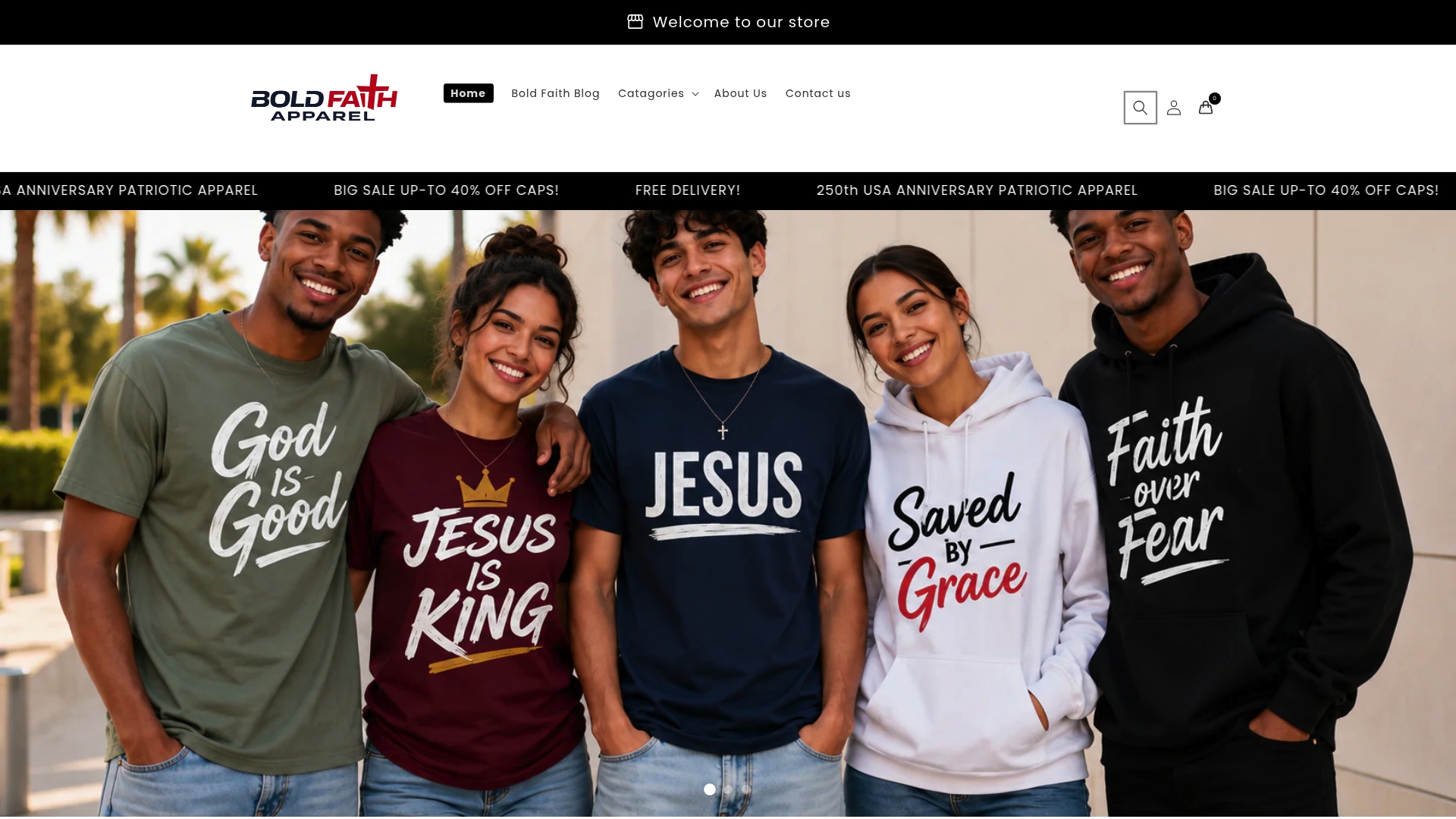
A Trust In The Lord Faith Tee works well for a quiet morning post with a one-line reflection on Psalm 23. A Faith Forward Comfort Crew Tee pairs naturally with a caption about stepping into a hard week with confidence instead of fear. Both give followers something specific to ask about, which is where real conversations start.
- Post a photo of the shirt with a short, honest line about why the verse matters to you.
- Tag a friend who needs the same encouragement that day.
- Use the design’s message, Blessed, Jesus Saves, or Faith Over Fear, as the caption’s first word.
| Product | Best Use in a Post |
|---|---|
| Trust In The Lord Faith Tee | Morning scripture reflection |
| Faith Forward Comfort Crew Tee | Encouragement during a hard week |
| Christian Bible Verse Unisex Hoodie | Testimony or unboxing clip |
Browse the full collection of Men’s T-Shirts, Women’s T-Shirts, and Hoodies & Sweatshirts to find a design that matches what you want to say this week.
FAQ
What does the Bible say about social media?
Scripture does not mention social media directly, but it calls believers to speak truth in love and to be ready to share the hope they carry, which applies to any platform. Passages on being salt and light inform how Christians are encouraged to use any public space, including online ones.
What are the three types of evangelism?
Common categories include personal or relational evangelism, event or public evangelism, and lifestyle or witness evangelism through daily actions. Social media evangelism mostly falls under personal evangelism, since it relies on one-to-one relationship and conversation.
What are the five P’s of evangelism?
Definitions of a “five P’s” model vary by ministry and are not a single agreed standard. Readers researching this term should treat any specific list as one teacher’s framework rather than a universal one.
What is digital evangelism?
Digital evangelism is sharing the gospel through online tools and platforms, including social media, video, and messaging apps. Social media evangelism is one part of it, focused specifically on personal relationship and conversation rather than broadcast content alone.
Sources
- Pew Research Center — Use of apps and websites in religious life
- Barna — Christians adopting AI rapidly
- The BLESS framework // The Church Digital
- Lausanne Movement — Proclamation evangelism


