

Visible faith identity is the active, outward expression of a Christian’s union with Christ, shaping every choice, word, and action in daily life. This is not a personality preference or a cultural trend. It is a biblical mandate. Christianity is inherently a public faith with Gospel claims designed to be openly proclaimed, not quietly contained. When you live your faith visibly, you anchor your purpose in something far more stable than career success, social approval, or cultural identity. Boldfaithapparel exists precisely for believers who understand that faith is not just believed. It is lived, worn, and declared.
Why visible faith identity matters for your sense of self
Modern culture offers dozens of competing identities. Social media, career titles, political affiliations, and group memberships all compete to define who you are. The result is widespread identity instability and anxiety, especially among younger believers who face constant pressure to conform or stay silent.
Christian identity is rooted in union with Christ rather than nationality, achievement, or social status. That foundation does not shift with trends or circumstances. It governs every dimension of self-understanding and action. When you know who you are in Christ, external pressure loses its grip.
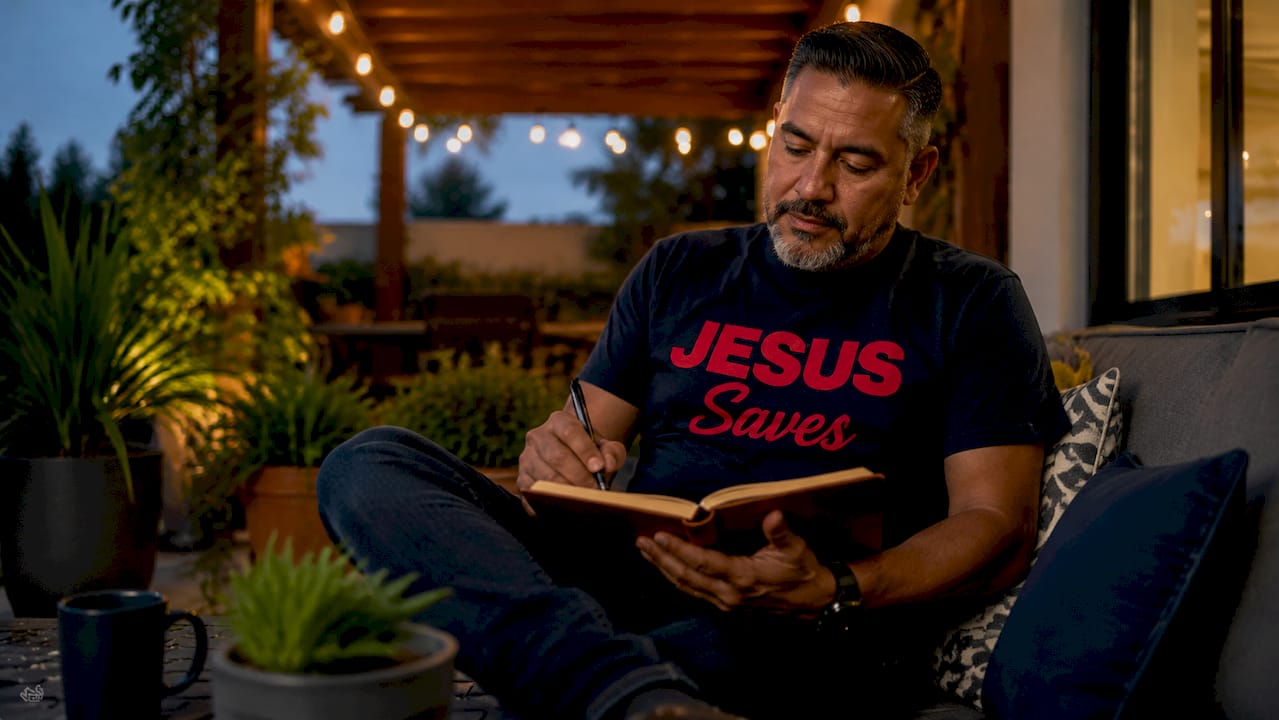
Aligning faith, identity, and purpose provides emotional and spiritual stability that conditional metrics like income or popularity simply cannot. Faith shifts your sense of worth from what you accomplish to who God says you are. That shift is not abstract. It changes how you respond to failure, how you treat others, and how boldly you speak.
The importance of faith identity becomes clearest under pressure. When culture demands silence, a believer with a stable, visible faith identity knows what to say and why. That clarity is not arrogance. It is the fruit of a settled foundation.
Here is what a stable faith identity looks like in practice:
- You make decisions based on biblical values, not peer approval.
- You speak truthfully even when the room disagrees.
- You serve others without needing recognition.
- You wear your convictions publicly without apology.
Pro Tip: Write out three core truths about who God says you are. Read them every morning before you check your phone. This practice builds the internal stability that makes visible faith natural, not forced.
What does the Bible say about public faith expression?
Scripture does not give Christians the option of a purely private faith. Christ’s lordship extends over every domain of life, including the workplace, the neighborhood, and the public square. The idea that faith belongs only in church or in private prayer is a cultural invention, not a biblical one.
“Let your light shine before others, so that they may see your good works and give glory to your Father who is in heaven.” Matthew 5:16 makes the purpose of visible faith clear: it is not self-promotion. It is functional illumination that directs others toward God.
Visible faith is not self-promotion but a lamp shining for God’s glory. Matthew 5:15-16 draws a sharp contrast between hiding a lamp under a basket and placing it where it gives light to everyone. The believer’s visible faith serves the same function. It is not about being seen. It is about pointing others toward the One worth seeing.
The Apostle Paul modeled this in Acts 17. He stood in the Areopagus in Athens and publicly challenged cultural idols, announcing Christ’s judgment and resurrection openly. He did not wait for a private audience. He engaged the public conversation of his day with the truth of the Gospel.
Several biblical principles support the public expression of faith:
- Christ commissioned believers to go into all the world, not to retreat from it.
- Salt and light metaphors in Matthew 5 only work when applied externally.
- The early church grew through public proclamation, not private belief alone.
- Psalm 11:3 asks what the righteous can do when foundations are destroyed. The answer is to stand firm and visible.
Visible faith is for God’s glory, not self-display. That distinction keeps public witness humble and authentic.
How does faith identity influence daily choices and community impact?
Faith identity shapes behavior in concrete, daily ways. It is not a Sunday category. It governs how you spend money, how you speak to coworkers, how you respond to injustice, and what you choose to wear. Faith becomes visible through active love and charity that transcends social status distinctions. That visibility creates real impact in communities.
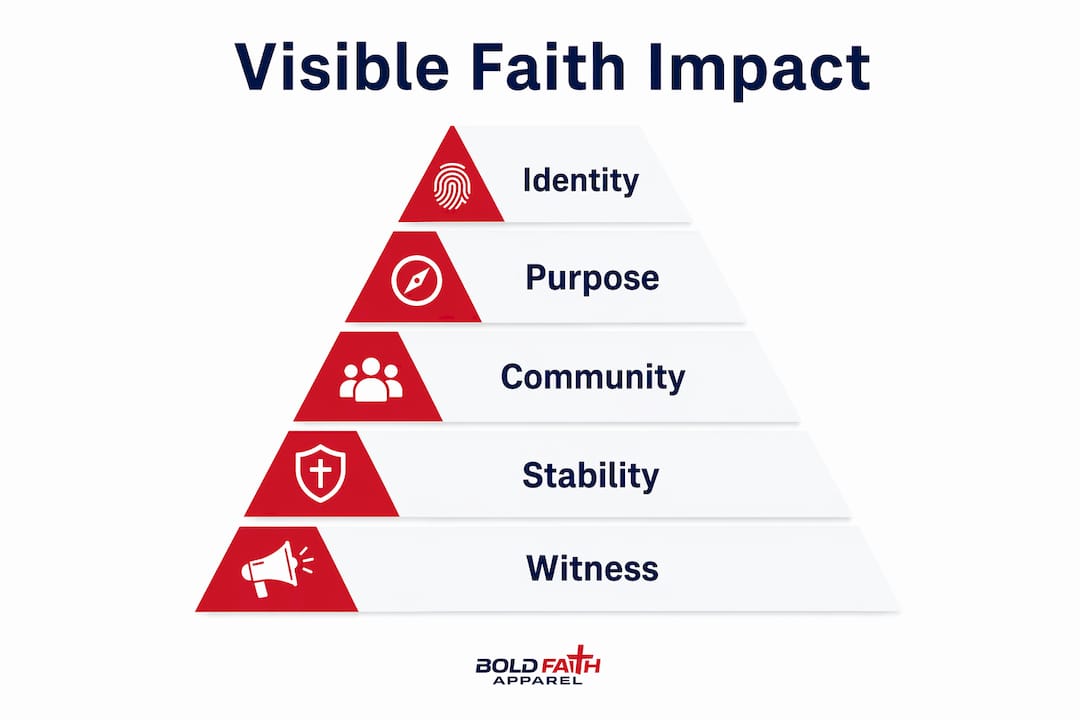
The significance of visible faith shows up in small choices that accumulate into a recognizable witness. A believer who consistently speaks with integrity, serves without complaint, and wears their convictions openly becomes a living testimony. That kind of consistency opens conversations that no sermon could force.
Here are four practical ways to express faith identity in daily life:
- Choose your words deliberately. Speak with honesty and grace in every setting, including professional ones. Your speech pattern is one of the most visible markers of your values.
- Serve without an audience. Volunteer, give, and help in ways that cost you something. Active charity that sees beyond social status is one of the clearest expressions of Christian identity.
- Wear your faith. Apparel with scripture-based messages like “Faith Over Fear,” “Jesus Saves,” or “He is Risen” starts conversations and signals conviction. Boldfaithapparel designs faith-based clothing specifically for believers who want their wardrobe to reflect their witness.
- Engage public conversations. Biblical faith trains believers to test ideas and recognize underlying worldviews. Speak into cultural conversations about truth, justice, and dignity with confidence and clarity.
Pro Tip: Start with one visible expression this week. Wear a hoodie with “JESUS is KING” or “Not My Strength but His” to work or the gym. Notice who asks about it. That question is an open door.
Visible faith in community does more than inspire individuals. It shapes the moral tone of neighborhoods, workplaces, and families. When believers live openly, they create reference points for others who are searching.
What are the common misconceptions about visible faith?
The biggest myth about visible faith is that it equals self-promotion or religious performance. That fear keeps many believers silent when they should speak and invisible when they should be seen. The biblical model is the opposite of showiness. It is humble, consistent, and others-focused.
Private-only faith risks becoming dormant comfort rather than a transformative reality. When faith stays entirely internal, it stops functioning as active witness. Communities lose a voice. Individuals lose accountability. The Gospel loses a carrier.
Three misconceptions worth addressing directly:
- “Visible faith is arrogant.” Arrogance promotes self. Visible faith promotes Christ. Matthew 5:16 settles this distinction. The goal is that others glorify God, not the believer.
- “Silence is safer.” Silence feels safe but weakens the witness in communities over time. Consistent private-only faith reduces the Gospel’s reach and the believer’s own spiritual vitality.
- “Faith is personal, not public.” This reflects a secular framework, not a biblical one. Christ’s lordship is total, not compartmentalized.
Public faith requires Spirit-empowered courage to resist the conformity and silence that comfort and fear impose. That courage is not manufactured by willpower. It grows through prayer, Scripture, and community with other believers who share the same convictions. The goal is interior discipline that aligns values and actions, not external performance that impresses others.
Key Takeaways
Visible faith identity is the outward expression of union with Christ, and it anchors purpose, shapes community, and fulfills the biblical mandate to let your light shine before others.
| Point | Details |
|---|---|
| Faith identity is rooted in Christ | Your identity in Christ is fixed and stable, unlike cultural or achievement-based identity markers. |
| Scripture mandates public faith | Matthew 5:16 and Acts 17 both show that visible, public faith is a biblical expectation, not an option. |
| Silence weakens witness | Private-only faith risks becoming dormant and reduces the Gospel’s reach in communities. |
| Daily choices express faith | Speech, service, apparel, and public engagement all carry the weight of visible Christian witness. |
| Visible faith glorifies God | The purpose of faith visibility is to direct others toward God, not to display the believer. |
Why I believe visible faith is a spiritual discipline, not a personality trait
People often treat visible faith as something that comes naturally to extroverts or bold personalities. I used to think the same thing. I assumed that quiet, private devotion was just as effective as open witness. I was wrong.
What I have learned is that visible faith is a discipline. It requires practice, intention, and a willingness to be uncomfortable. The first time I wore a shirt with “Jesus Saves” to a crowded event, I felt self-conscious. By the tenth time, it felt like armor. Not because I had become bolder by nature, but because I had practiced choosing visibility over comfort.
The rewards are real. Conversations open up that would never happen otherwise. People who are searching for something they cannot name see a reference point in you. Your own faith deepens because you are living it out loud, not just thinking it privately. Checking out bold Christian apparel that carries real scriptural weight changed how I thought about my wardrobe entirely.
The fear of looking religious or self-righteous is real, but it is also a trap. The antidote is not silence. It is authenticity. When your visible faith is backed by genuine love, consistent integrity, and real humility, people notice the difference. They are drawn to it, not repelled by it. That is the witness worth building.
— Larry
Boldfaithapparel: apparel that carries your witness
Faith expressed through clothing is one of the most consistent and low-effort forms of visible witness available to believers today.
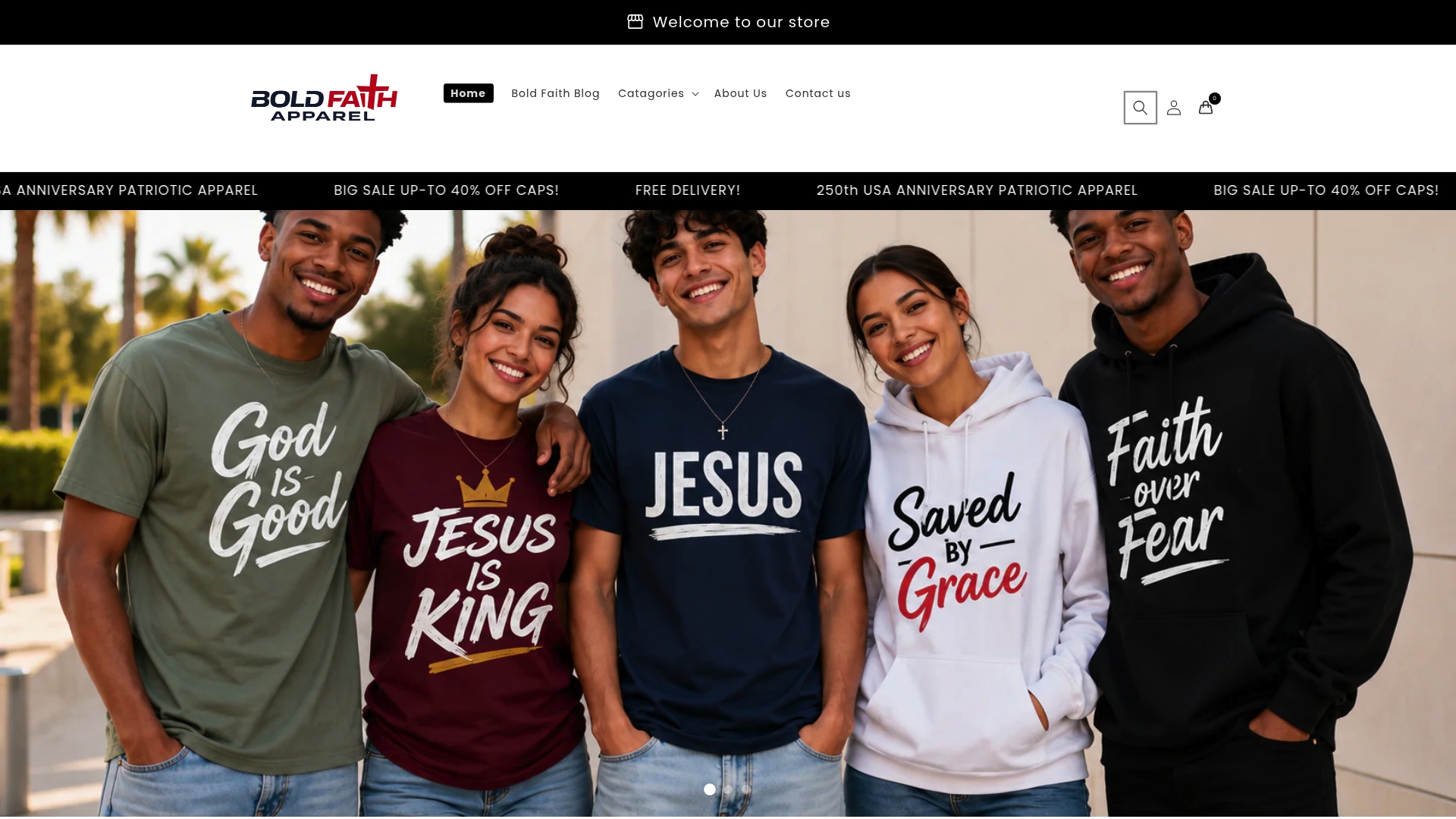
Boldfaithapparel designs scripture-based apparel for Christians who want their wardrobe to speak before they do. The Christian Bible Verse Unisex Hoodie carries messages like “Faith Over Fear,” “Jesus Saves,” “He is Risen,” and “There is Power in the Name of Jesus” in bold, wearable designs. Each piece is built for daily wear, not just Sunday. FREE DELIVERY available. Shop now and wear your faith where it can be seen.
FAQ
What is visible faith identity?
Visible faith identity is the outward, active expression of a Christian’s union with Christ through daily choices, speech, service, and appearance. It is rooted in Scripture and shaped by the believer’s relationship with God, not by cultural trends.
Why is public faith expression biblical?
Matthew 5:16 commands believers to let their light shine before others so that God receives glory. Acts 17 shows Paul publicly proclaiming Christ in a secular cultural setting, establishing public witness as a core Christian practice.
Does visible faith mean being loud or showy?
Visible faith is not performance. Its biblical purpose is functional illumination for others, not self-display. Matthew 5:15-16 clarifies that the goal is for others to glorify God, not to draw attention to the believer.
How does faith identity affect mental and emotional health?
Aligning faith, identity, and purpose provides emotional and spiritual stability by shifting worth from conditional metrics like success or approval to the fixed, God-given value of being known and loved by Christ.
How can Christian apparel support visible faith?
Wearing scripture-based apparel like hoodies or T-shirts with messages such as “JESUS is KING” or “Faith, Love, Hope” creates natural conversation openings and signals conviction consistently in everyday settings.


