

Start with a short duration, one short passage, and one method you can repeat tomorrow. Pick a simple plan, whether that’s a Gospel like John or a slow walk through the Psalms, and pair it with a structured approach such as S.O.A.P. or the Inductive method, so you’re not just reading words but working through them. Pray before you open the page and after you close it. Consistency, not intensity, is what makes a habit stick, and Boldfaithapparel believes that habit is worth building one honest day at a time.
TL;DR:
- Starting with just 10 minutes daily and scheduling it as an appointment significantly increases the likelihood of forming a lasting Bible reading habit.
- Using a structured method like S.O.A.P. or the Inductive approach helps turn passive reading into active growth and deeper understanding.
- Choosing a translation that is easy to read and supplementing it with a study Bible reduces confusion, especially when encountering unfamiliar passages.
- Alternating between Old and New Testament books and integrating community or accountability partners enhances comprehension and motivation.
- Preparing for dry seasons by shortening sessions, switching translations, or seeking mentorship can quickly restore momentum without guilt.
Table of Contents
- Bible Reading Tips You Can Use Starting Today
- S.O.A.P., Inductive Study, and Other Methods Worth Learning
- Picking a Translation and Tools That Actually Help
- Building a Habit That Survives a Busy Week
- Reading in Context: Why Genre and History Matter
- Choosing a Reading Plan That Fits Your Actual Life
- Journaling and Memory Work That Make It Stick
- When Bible Reading Feels Dry
- A Word From Boldfaithapparel on Living This Out
- Wear What You’re Reading
- Sources
Bible Reading Tips You Can Use Starting Today
Most people don’t quit their Bible reading habit because Scripture is boring. They quit because the plan they picked was too ambitious for the life they actually live. These tips fix that mismatch.
-
Start with 10 minutes, not an hour. A short daily reading you actually finish beats an hour-long session you dread and eventually skip. Practical guidance on building the habit consistently points to small starting windows as the difference between a habit that lasts and one that fizzles by February.
-
Treat it like an appointment, not an impulse. Waiting for the “right mood” to read is one of the most common reasons people fall off. Ministry leaders recommend scheduling Scripture time like any other commitment, then protecting that slot the same way you’d protect a doctor’s appointment.
-
Start with the Gospel of John. New readers often get lost in Leviticus genealogies before they’ve built any momentum. Guides on beginning Bible reading routinely recommend starting with a Gospel, particularly John, then moving into Genesis and alternating between Old and New Testament books from there.
-
Read passages, not floating verses. A single verse ripped from its paragraph can mean something the author never intended. Read the whole section, note who’s speaking and why, and let the passage’s flow guide your understanding instead of your assumptions.
-
Choose a translation you’ll actually read, and a study Bible for backup. The best translation is the one you open. A study Bible adds book introductions, footnotes, and cross-references that answer the “wait, what does this mean” questions before they stall your momentum.
-
Use a method instead of just skimming. S.O.A.P. (Scripture, Observation, Application, Prayer) and the Inductive method both move you from passive reading to active engagement, which is where actual growth happens.
-
Put audio Bibles to work during dead time. Commutes, dish washing, and dog walks are “natural pockets” you’re probably wasting. An audio Bible app turns that time into Scripture time without adding a single minute to your schedule.
-
Alternate Old and New Testament books. Reading straight through Genesis to Revelation in order sounds noble but often stalls somewhere around Numbers. Alternating testaments keeps variety in your reading and helps you see how the whole story connects.
-
Find a reading partner or small group. Reading alone makes it easy to misread a passage and never know it. Community study and shared discussion sharpen your interpretation and hold you accountable when motivation dips.
-
Set a trigger, not just a goal. “Read the Bible daily” is a goal. “Read one chapter after my morning coffee” is a trigger. Leave your Bible on the kitchen table, set a recurring phone alarm, or keep a journaling Bible next to your favorite chair. Environment shapes habit more than willpower does.
-
Have a plan for dry seasons before they hit. Every reader eventually hits a stretch where Scripture feels flat. Switching translations, shortening the session to five minutes, or reaching out to a mentor for perspective usually restarts momentum faster than pushing through alone.
-
Journal something, even one sentence. You don’t need pages of notes. One written observation per day builds a record you can look back on, and it forces you to actually process what you read instead of letting it slide past.
Pro Tip: Keep your Bible somewhere you’ll physically see it, not tucked in a drawer. A closed Bible on a nightstand gets opened far more often than one buried in a bag.
S.O.A.P., Inductive Study, and Other Methods Worth Learning
A reading method gives your Bible time structure, the same way a workout plan gives your gym time purpose. Two methods cover most of what a daily reader needs.
- S.O.A.P. stands for Scripture, Observation, Application, Prayer. You write out the verse or passage, note what stands out, ask how it applies to your life today, then close in prayer. It’s short-form and built for daily devotional use.
- The Inductive method follows three broader steps: observation (what does the text say), interpretation (what did it mean to its original audience), and application (what does it mean for me now). It’s the same structure S.O.A.P. draws from, just stretched out for deeper study sessions.
Say you’re reading Philippians 4:6, on not being anxious. Using S.O.A.P., you’d write the verse, observe that Paul pairs “prayer” with “thanksgiving” rather than just complaint, apply it by naming one specific worry to hand over in prayer today, then pray that exact thing. Using the Inductive method on the same verse, you’d dig further: who was Paul writing to, what was their situation, and how does that context sharpen what “do not be anxious” actually meant for a persecuted church before you apply it to your own life.
S.O.A.P. fits a 10 minute morning routine. Inductive study fits a Saturday afternoon when you want to go deeper on one book or theme.
Pro Tip: Don’t switch methods every week looking for the “best” one. Pick one, use it for a month, then evaluate.
Picking a Translation and Tools That Actually Help
The translation debate intimidates a lot of new readers, but it breaks down simply once you know the three families.
- Formal equivalence (ESV, NASB) sticks close to the original word order and wording, best for careful study and cross-referencing.
- Dynamic equivalence (NIV, NLT) prioritizes readability and natural English phrasing, best for daily reading and beginners.
- Paraphrase (The Message) trades precision for vivid, conversational language, useful for fresh perspective on familiar passages.
A study Bible adds book introductions, historical background, and cross-references right on the page, which matters most when you’re reading anything outside the Gospels and hit an unfamiliar custom or name. Bible Gateway’s guidance on building consistency points to study Bibles, apps, and reading plans as the three tools that keep most readers on track long term. Apps with daily reminders and audio playback are worth prioritizing during busy or low-energy seasons, when opening a physical book feels like one task too many.
Building a Habit That Survives a Busy Week
Tips only work if they turn into a repeatable rhythm. Here’s how to make that happen without white-knuckling it through willpower alone.
- Name the exact time and place. “Sometime in the morning” isn’t a plan. “6:45 AM, kitchen table, before checking my phone” is.
- Set a micro-goal you can’t fail at. Ten minutes or one S.O.A.P. entry is small enough that skipping it feels harder than doing it.
- Install a physical or digital trigger. An alarm labeled “Scripture” or a Bible left open on your desk removes the decision fatigue of remembering to start.
- Add accountability. Text a friend when you finish, join a small group, or use an app that tracks streaks and sends reminders. Being watched, even gently, changes follow-through.
Pro Tip: Pair your reading with something you already do daily, like your morning coffee or your commute. Habit stacking works better than adding a brand new standalone routine.
Reading in Context: Why Genre and History Matter
The fastest way to misread the Bible is to treat every verse the same way, regardless of whether it’s poetry, law, prophecy, or narrative. A psalm uses different language rules than a letter from Paul, and a proverb isn’t a promise. Understanding the literary and historical setting of a passage before applying it personally is what separates careful reading from proof-texting, where a verse gets pulled out of its flow to support a point it was never making.
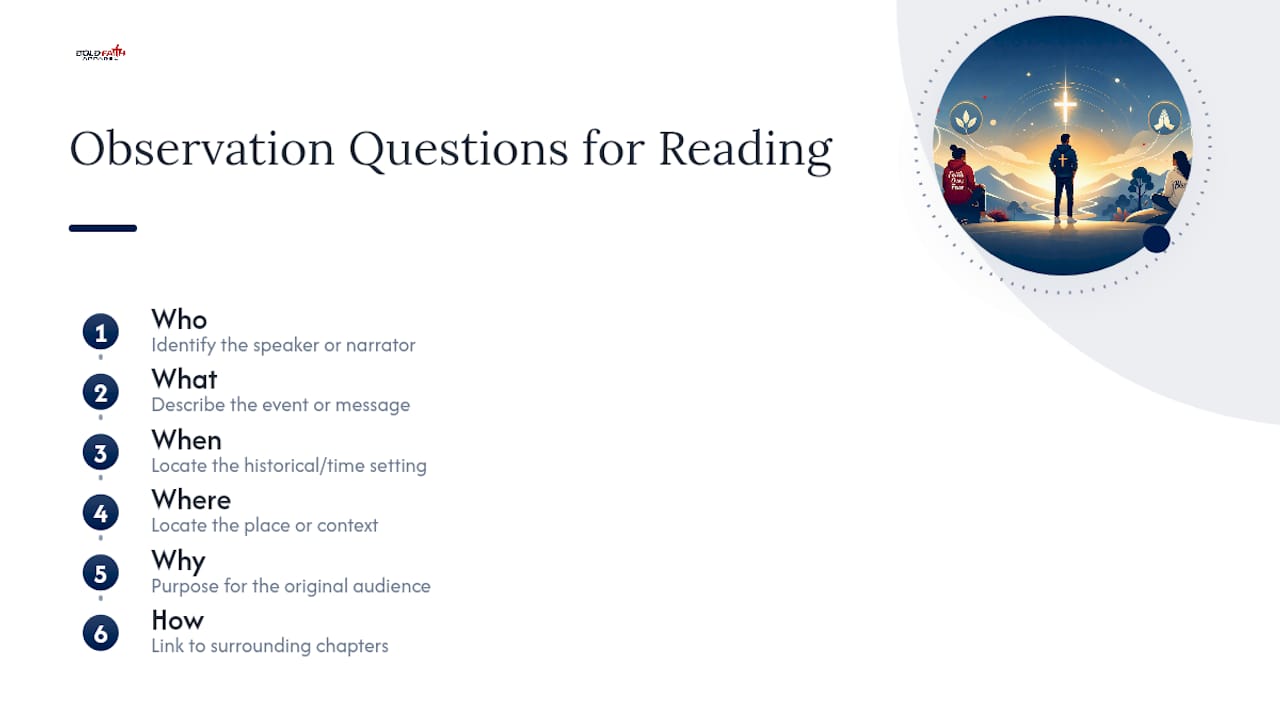
A simple observation habit fixes most of this. Ask the five Ws and an H as you read: who is speaking, what is happening, when and where does it take place, why does it matter to the original audience, and how does it connect to the surrounding chapters. When a passage genuinely confuses you, a study Bible footnote, a trusted commentary, or a conversation with a pastor beats guessing.
Community study and public preaching consistently help correct blind spots that solo reading tends to miss, since a group catches misreadings a single reader might not notice.
Choosing a Reading Plan That Fits Your Actual Life
A reading plan only works if its pace matches your calendar, not your aspirations.
- Gospel-first plans work best for new believers: start with John, then Mark, then branch into the rest of the New Testament.
- Canonical plans move straight through Genesis to Revelation, best for readers who want the full narrative arc without skipping around.
- Chronological plans reorder events by when they actually happened historically, useful for readers who want the “story” clarity a canonical order sometimes obscures.
- One-year plans pace around three to four chapters daily, best for disciplined readers ready for a full-Bible commitment.
If you miss a day, or a week, skip ahead rather than trying to “catch up” on backlog reading. Guilt-driven catch-up sessions are exactly what kills momentum for most readers.
Journaling and Memory Work That Make It Stick
A short journal entry turns a passage you read into a passage you actually remember. The S.O.A.P. template works well here: write the Scripture, your Observation, your Application, and a closing Prayer line. One real example: Scripture, Psalm 23:1. Observation, God is described as a shepherd who provides, not a distant ruler. Application, name one area today where you’re trying to provide for yourself instead of trusting Him.
- Repeat a verse aloud several times to lock it into memory.
- Write it by hand once a day for a week.
- Speak it out loud during a walk or drive, which engages a different kind of recall than silent reading.
Revisit old journal entries every few months. Watching your own growth on paper is often more encouraging than any single day’s reading.
When Bible Reading Feels Dry
- Pray honestly about the dryness itself before you do anything else. Ask God to give you hunger for His Word.
- Shorten your session to five minutes or switch to an audio Bible for a change of pace.
- Try a different translation for a week, or read Psalms aloud instead of your current plan.
- Reach out to a mentor, pastor, or small group instead of pushing through alone.
Consistency beats motivation over time. A dry week doesn’t erase months of small, steady progress.
A Word From Boldfaithapparel on Living This Out
At Boldfaithapparel, we believe faith is not just believed, it’s lived, and that starts with Scripture in your hands before it ever shows up on a T-shirt. Pick one tip from this list and do it today. That’s the whole secret.
— Larry
Wear What You’re Reading
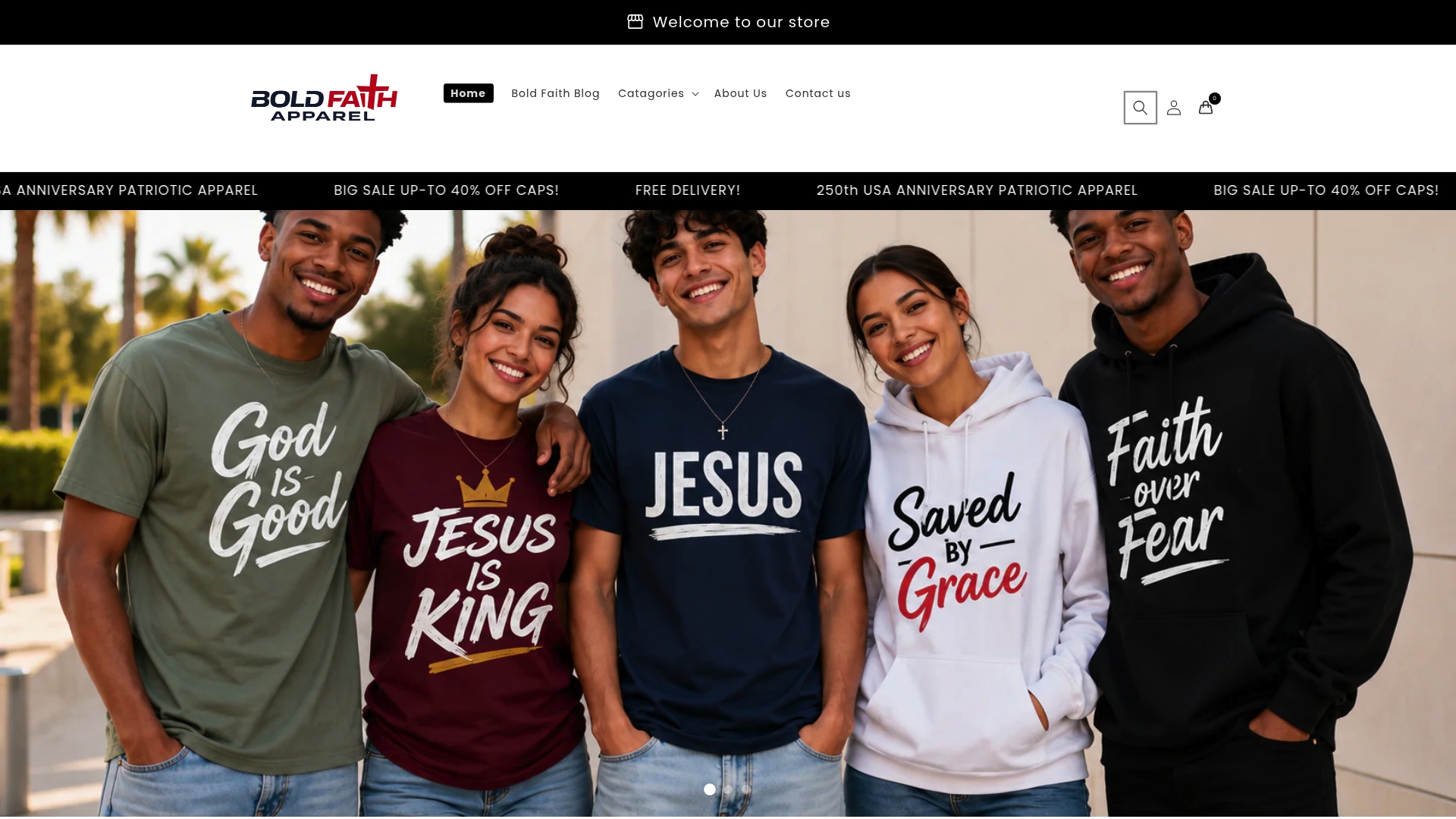
Reading the Word changes what you carry into your day, and sometimes that shows up in what you wear. Boldfaithapparel makes Christian t-shirts and hoodies with messages like “Faith Over Fear,” “Not My Strength but His,” and “Jesus the Way the Truth and the Life John 14:6” designed to spark a conversation or remind you of a verse mid-study.
A few ways readers put these to use:
- A “Blessed” hoodie or “God is Good” tee as a first gift for a new believer starting their own reading habit.
- A journaling hoodie worn during quiet time, something comfortable enough to sit in for a S.O.A.P. session at the kitchen table.
- A “He is Risen” or “Jesus Saves” cap as an everyday reminder before you’ve even opened your Bible.
If you want a piece that pairs well with a reading routine, or a gift for someone just starting theirs, browse the full apparel collection at Boldfaithapparel and find a message that matches where you are in your walk right now. For more on making that walk consistent day to day, building spiritual confidence in everyday life is a good next read.
Sources
- Top ten Bible study methods
- Why context matters when reading the Bible
- How to Read the Bible: Tips and FAQ 2026
- Precept Bible study method
- How to read the Bible


