

Unapologetic Christian style is a bold, faith-forward apparel aesthetic, statement T-shirts, hoodies, and caps designed to publicly declare belief instead of hiding it. It borrows the visual language of streetwear and puts scripture, symbols, and testimony front and center. Start simple: pick one statement tee or a bold hoodie and wear it somewhere ordinary, like the grocery store or the gym. Bold Faith Apparel builds pieces for exactly this purpose, and outlets like The Styles Magazine have covered why Generation Z is driving this shift toward bolder, more visible faith wear.
Key Takeaways
Unapologetic Christian style works because it treats everyday apparel, T-shirts, hoodies, and caps, as visible, wearable testimony rather than passive fashion.
| Point | Details |
|---|---|
| Definition | Bold, faith-forward apparel with clear typography, color contrast, and declarative messaging that publicly states belief. |
| Start small | Build a starter wardrobe with one or two statement tees, a hoodie, a cap, and a neutral layering piece. |
| Quality drives longevity | Heavier fabric weights and screen printing or embroidery hold up better than cheap heat transfer prints. |
| Apparel opens conversations | Clothing sparks dialogue rather than delivering a full message, so prepare short, invitational answers. |
| Shop with transparency in mind | Bold Faith Apparel lists fabric weight, print method, and fit details on every product page to support confident buying. |
Table of Contents
- What Makes Christian Apparel Read as Bold Instead of Basic?
- What Should Go in a Starter Unapologetic Christian Wardrobe?
- What Phrases and Scripture Work Best, and What Should You Avoid?
- How Do You Style Bold Faith Pieces Into Everyday Outfits?
- Which Fabrics and Print Methods Actually Last?
- How Do You Use Apparel as a Conversation Starter, Not a Statement Piece?
- Choosing Pieces That Fit Your Denomination and Personal Convictions
- Wearing Bold Faith Apparel Across Church, Work, and Everyday Life
- What Ethical Production Practices Should You Look For?
- Where to Buy a Starter Unapologetic Christian Wardrobe
- Frequently Asked Questions
- Sources
What Makes Christian Apparel Read as Bold Instead of Basic?
Four visual choices separate unapologetic Christian apparel from the faded, clip-art crosses of decades past: typography, color, symbolism, and silhouette. Bold, thick-weight fonts carry a message across a room. High-contrast color schemes, like deep navy paired with striking red accents, or black paired with white block text, make a slogan pop instead of blend in. Scripture snippets get treated like headlines, not fine print.
The messaging tone matters as much as the graphics. A shirt that reads “Faith Over Fear” or “Jesus Saves” declares something. A shirt with a watered-down inside joke or a pun on a Bible verse reads as flippant, and it undercuts the whole point of wearing your faith out loud. The goal is testimony, not novelty.
Streetwear silhouettes carry the message today. Oversized tees, relaxed-fit hoodies, and caps with raised embroidery or patchwork detailing read as current rather than dated. That shift toward contemporary Christian streetwear culture is a direct response to what Gen Z wants from faith-based clothing.
Core elements to look for:
- Bold, high-contrast typography that reads clearly from ten feet away
- Deep navy, black, or red color schemes with sharp accent contrast
- Symbols used with restraint: a single cross or ichthys, not a cluttered collage
- Short, declarative messaging: “Blessed,” “God Is Good,” “He Is Risen”
- Relaxed, modern fits instead of boxy, dated cuts
Pro Tip: A cotton blend with a slight texture (rather than flat, cheap poly-cotton) makes a print sit better on the fabric and photograph sharper for social media, which matters if the shirt is going to double as a conversation starter in person and online.
What Should Go in a Starter Unapologetic Christian Wardrobe?
Start with five pieces. Get one or two statement T-shirts with a message you would actually say out loud, something like “Jesus Saves” or “Not My Strength but His.” Add one bold hoodie for cooler weather and layering, since hoodies carry a message longer through fall and winter without needing to be re-styled every day. Grab one cap, ideally with embroidered text rather than a flat sticker print, because embroidery holds up to daily wear far better. Round it out with one neutral layering piece, a plain jacket or sweatshirt, so your bold pieces have something quiet to pair against.
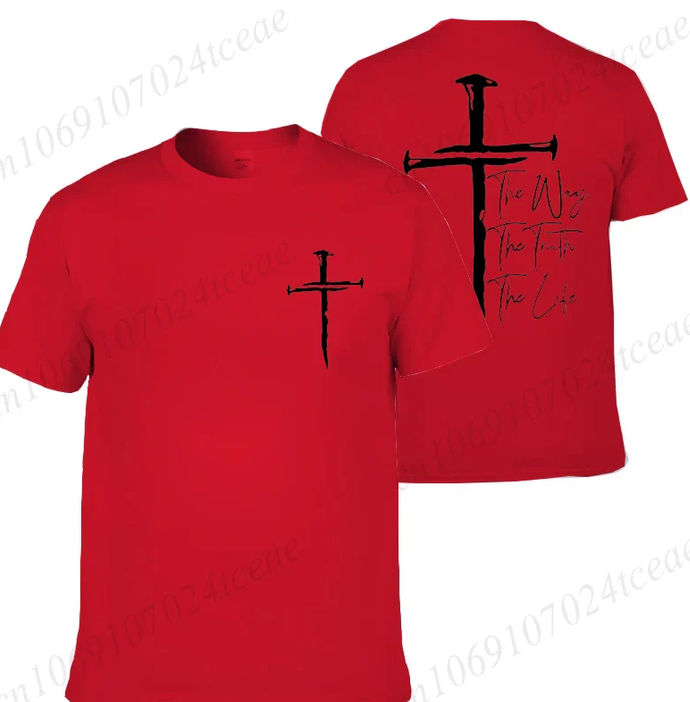
Budget-wise, expect entry-level tees in the affordable range, hoodies priced higher because of fabric and print costs, and caps landing in the middle. Spend more on the piece you will wear most; a $25 shirt with a cracked print after three washes costs more in the long run than a well-made $35 one.
If you are building a following or just sharing your faith online, photograph the hoodie or the statement tee, not the cap. Caps read small in photos, but a chest print on a hoodie tells the whole story in one frame.
What Phrases and Scripture Work Best, and What Should You Avoid?
The best unapologetic designs use short, punchy language: “Faith Over Fear,” “Blessed,” “Jesus Is King,” “God Is Good,” “There Is Power in the Name of Jesus.” Full verses work too, when kept legible, “Jesus the Way the Truth and the Life, John 14:6” or “Praise the Lord, Psalm 150:6” both read clearly on a chest print without crowding the design.
Do:
- Keep text short enough to read in two seconds
- Pair scripture references with the verse itself so context travels with the message
- Choose high-contrast prints (light text on dark fabric or vice versa)
Don’t:
- Parody a secular logo or brand mark to make a “clever” faith joke
- Pull a verse out of context just because it fits a catchy layout
- Cram multiple verses onto one shirt until it looks cluttered
Embroidered caps read as more premium and intentional than screen-printed ones, since the raised thread signals durability. Screen printing works well for tees where bold, flat color blocks need to pop; heat transfer tends to crack faster and reads cheaper up close.
How Do You Style Bold Faith Pieces Into Everyday Outfits?
You do not need a separate wardrobe for “faith clothes” and “regular clothes.” Three formulas cover most situations:
- Statement tee, denim, and sneakers for casual daily wear or errands
- Bold hoodie layered under a plain jacket, paired with neutral pants, for cooler days or travel
- Cap, tee, and a casual blazer for dressier casual settings like a coffee meetup or a Bible study
For work, keep the message smaller and layer it under a cardigan or jacket where it’s visible but not the whole outfit. For outreach events or weekend hangouts, go full statement, let the message lead. For church, read the room: some congregations welcome bold streetwear, others lean more traditional, so a cap and neutral layering piece can dial the look back without losing the message entirely.
Pro Tip: Scale the boldness to the setting, not the outfit. A small embroidered cross on a cap says just as much in a professional space as a giant chest print says at a youth event.
Which Fabrics and Print Methods Actually Last?
Fabric weight determines both drape and print clarity. Tees in the 180 to 220 gsm range feel light and casual; anything above 220 gsm holds a print sharper and resists show-through washing. Hoodies need heavier fleece, typically 280 to 300 gsm, to keep their shape and stay warm through repeated wear.
Screen printing gives the boldest, most saturated color and holds up well on high-contrast designs. Direct-to-garment printing handles detailed, multi-color art better but can fade faster with rough washing. Embroidery costs more but essentially never cracks or peels, which is why it dominates caps. Heat transfer is the cheapest option and the first to show wear.
Before buying, check the product description for fabric weight, stitch count on embroidered items, the print method, and whether the garment is pre-shrunk. A product page that lists these details plainly, along with supplier and production transparency, signals a brand that stands behind its craftsmanship as much as its message.
- Look for stated fabric weight (gsm) rather than vague “premium cotton” language
- Confirm the print method matches the design (screen print for bold color, embroidery for caps)
- Check for a pre-shrunk note to avoid post-wash sizing surprises
- Favor providers who disclose supplier and production practices on the product page
How Do You Use Apparel as a Conversation Starter, Not a Statement Piece?
A shirt rarely carries the whole Gospel message, and it isn’t meant to. Research on Christian apparel’s effectiveness is clear that clothing works best as an opening, not an argument. When someone asks “What does that mean?”, have one or two sentences ready, not a sermon.
Keep the tone invitational. “It’s a reminder that my strength comes from God, not me,” opens a door. A defensive or combative answer closes it. Respect workplace and school dress codes by choosing subtler pieces in those settings, and save the boldest statement tees for outreach events or casual weekends.
- Notice someone reading your shirt or cap
- Smile and let them ask, don’t force the conversation
- Answer briefly and personally, tied to your own faith
- Invite further conversation (“Happy to talk more if you want”)
Pro Tip: Keep your answer under two sentences the first time. People engage more when they feel invited, not lectured.
How Do You Keep Prints and Fabric Looking Sharp?
Wash bold apparel inside out in cold water on a gentle cycle to protect the print surface. Skip bleach and go easy on fabric softener, since some prints react poorly to it. Tumble dry on low or air dry instead of high heat, which is the fastest way to crack a print.
- Fold heavy hoodies to keep their shape; hang tees with reinforced necklines
- Keep printed panels out of direct, prolonged sun exposure
- Follow the provider’s care label, and test one wash before doing a full load if you’re unsure
Choosing Pieces That Fit Your Denomination and Personal Convictions
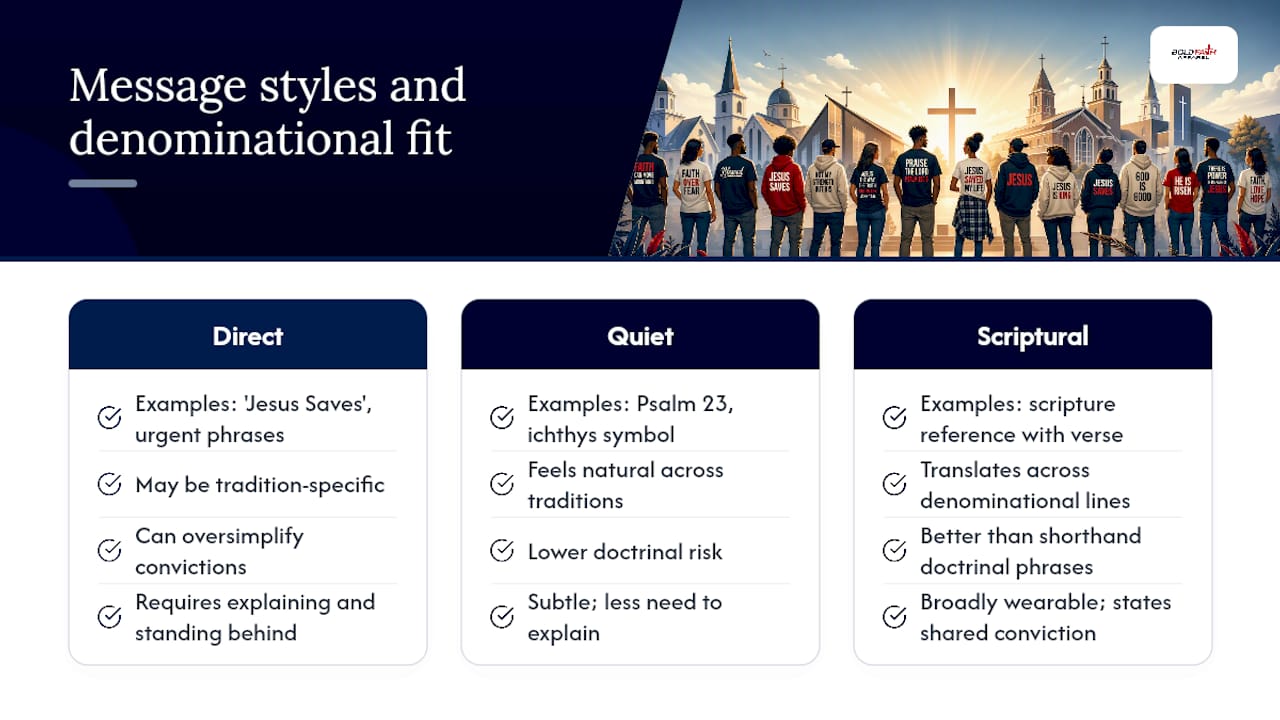
Not every faith-forward design fits every believer the same way, and that’s fine. Some Christians gravitate toward direct, urgent language like “Jesus Saves” or “There Is Power in the Name of Jesus.” Others prefer quieter, more reflective messaging like a full Psalm 23 print or a simple ichthys symbol without accompanying text. Neither approach is more “unapologetic” than the other; the boldness is in wearing it publicly at all.
Denominational background can shape which symbols and phrases feel natural. A design centered on a specific doctrinal phrase might resonate deeply within one tradition and feel unfamiliar in another. When in doubt, scripture references paired with the verse text tend to translate across denominational lines better than shorthand phrases that assume shared theological vocabulary.
Personal convictions matter too. If a slogan feels like it oversimplifies something you hold with more nuance, don’t wear it just because it’s popular. Unapologetic style means wearing what you actually believe, not performing a version of faith that isn’t yours. Choose pieces you could explain and stand behind in a real conversation, since that’s exactly what this clothing invites. A shirt that reads “Blessed” or “God Is Good” works broadly across traditions precisely because it states a shared conviction without wading into doctrinal specifics that might not be yours to represent.
Wearing Bold Faith Apparel Across Church, Work, and Everyday Life
Context should shape intensity, not conviction. At church, read your congregation. Some churches, especially newer or younger congregations, welcome streetwear-style statement tees as part of worship attire. More traditional congregations may expect a dialed-back approach, a cap or a subtly branded layering piece rather than a full graphic tee.
At work, most dress codes tolerate a small embroidered logo or a modest cap far more comfortably than a large chest graphic. Layer a bold hoodie under a blazer or cardigan so the message peeks out at the collar rather than dominating the outfit. This keeps you compliant with workplace norms while still visibly representing your faith.
Casual outings and weekend errands are where the boldest pieces get their moment. Full statement tees, oversized hoodies, and graphic caps all work here, precisely because there’s no dress code limiting the message. Outreach events and youth gatherings are similar; the bolder the better, since the setting itself invites conversation.
The through-line: unapologetic doesn’t mean identical in every setting. It means never hiding your faith entirely, even when you’re adjusting how loudly you say it.
What Ethical Production Practices Should You Look For?
Faith-forward apparel should reflect faith-aligned values in how it’s made, not just what it says. Look for providers who state their production process clearly on product pages rather than burying it. Transparency about where garments are printed, what fabric suppliers are used, and whether pre-shrunk or quality-tested claims are backed by specifics all signal a provider that takes craftsmanship seriously.
Faith-branded merchandise has long served a mission-driven purpose beyond the transaction itself. Churches and ministries that sell branded goods, as explored by The Flaming Bean Roastery, often use that revenue and visibility to support community and outreach work, a model that applies just as directly to apparel as it does to coffee.
When evaluating a provider, check whether their mission statement matches their product execution. A brand that talks about testimony and courage should also be willing to answer questions about stitch count, fabric sourcing, and print durability. Ethical alignment shows up in the details customers rarely think to ask about until something goes wrong, an unclear return policy, vague fabric descriptions, or print methods that aren’t disclosed until after checkout.
Where to Buy a Starter Unapologetic Christian Wardrobe
Bold Faith Apparel builds its entire catalog around this exact aesthetic: bold typography, deep navy and red color schemes, and messaging that declares rather than hints. A recommended starter pack looks like one statement tee such as the Jesus The Way graphic tee, one bold hoodie for layering through fall, and one embroidered cap for daily wear.
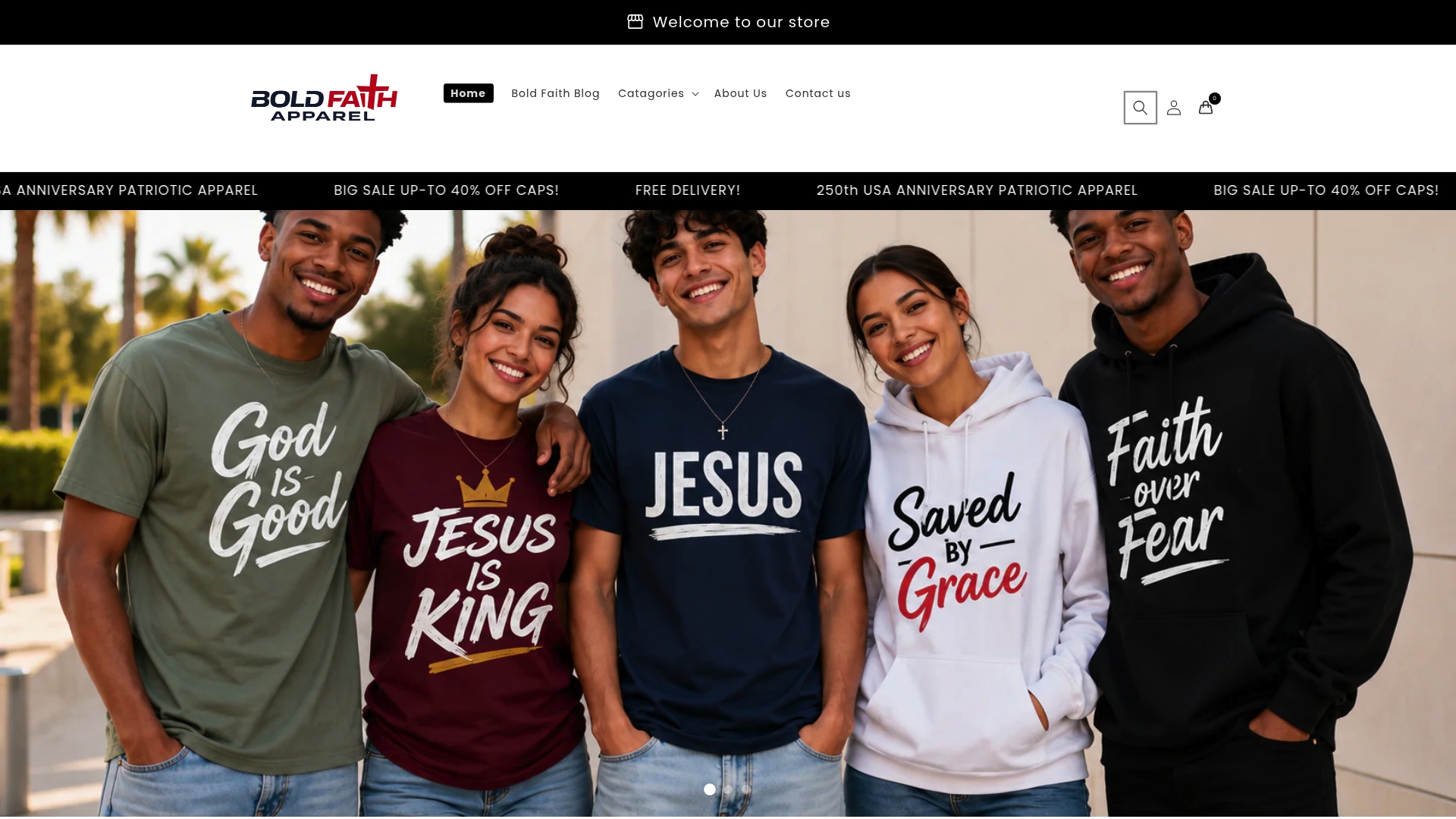
Every product page lists fabric weight, print method, and fit details up front, so you know what you’re getting before checkout, no guessing whether a print will crack after three washes. That transparency matters, especially for pieces you plan to wear regularly as testimony. Larry, who writes on Bold Christian Living and wardrobe-building for faith expression, covers exactly this intersection of quality apparel and everyday discipleship for the brand’s blog.
Before you check out, measure a shirt you already own and compare it to the size chart rather than guessing your usual size, since fits vary between oversized streetwear cuts and standard tees. Bold Faith Apparel ships with free delivery, so building out a full starter wardrobe, tee, hoodie, and cap together, costs less than piecing it together across multiple orders elsewhere. Start with the Jesus graphic tee collection and build from there.
Why This Aesthetic Matters More Than a Fashion Choice
Clothing is one of the few daily choices that puts your faith in front of strangers without you saying a word first. A statement tee at the gym or a cap at the grocery store does something a Sunday service can’t: it reaches people who would never walk into a church. I’ve seen how a single well-made piece, worn consistently, opens more doors than a closet full of forgettable basics ever could. That’s discipleship lived out in public, one ordinary errand at a time.
Frequently Asked Questions
What is unapologetic Christian style, in simple terms? It’s a bold apparel aesthetic, statement T-shirts, hoodies, and caps, built around visible faith messaging, high-contrast design, and streetwear-inspired fits that publicly declare belief instead of downplaying it.
Is unapologetic Christian style only for younger believers? No. It’s especially popular with Gen Z, who tend to reject dated Christian apparel designs, but the aesthetic works across ages since the core idea, wearing faith visibly, isn’t tied to a specific generation.
How many pieces do I need to start? Five core pieces cover most needs: one or two statement tees, one bold hoodie, one cap, and one neutral layering piece to balance bolder items.
Will a Christian T-shirt actually start real conversations? Often, yes, though it typically opens a conversation rather than completing one. Have a short, personal answer ready for when someone asks what your shirt means.
What should I avoid when choosing a design? Skip designs that parody secular logos, pull scripture out of context, or crowd the print with too much text. Simple, high-contrast, well-placed messaging reads as more authentic than cluttered or gimmicky graphics.
Sources
- Wearing Our Faith — Christ and Pop Culture
- The Power Of Wearing Your Faith: How Christian Apparel Can Spark Conversations — The Styles Magazine


